 I recently, mistakenly, purchased a Fluke 322 off eBay for far more than I should have paid (paid about $35 for a broken one). I thought it would be an easy repair, but sadly, the issue was that the case was broken (guessing it got dropped from some height, or was partially crushed). The self-taping screws all screwed into the plastic casing front, and several of those threaded lugs were broken, so the case wasn’t being held together fully, which results in the contacts from the rotating switch not making contact enough to turn the multimeter on.
My first thought was to contact Fluke and ask about purchasing a replacement front case. Thankfully, they got back to me quickly and said this unit is on their “repair by replace” list. Meaning for $90, I could send it in, and they would send me the new model of this unit, which is also on the “repair by replace” list, and also means they have no parts available.
My second attempt was to use some JBWeld to repair the broken lugs. Sadly, this resulted in the lugs being the wrong height such that the board, even though it would screw in at that point, still didn’t provide enough pressure to the contacts to power on.
So, sadly, this one is a loss. I’ve kept the unit in the parts drawer incase I ever see one for cheap… or I manage to see someone interested in one for the main board, clamp, etc. down the road.
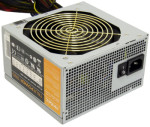 Couple weeks back I got a request to repair a friends computer. It would lock up, not reboot, etc. The computer was largely for gaming, so after an initial software scan, I figured it must be heat. Opening the machine, I noticed none of the case fans are running. I had initially done the build on the machine, and new all the case fans were wired to the fan power “bus” provided by the power supply (which handled speeding/slowing the fans based on case temp), an Antec TruePower Trio TP3-550. Asking the friend, he mentioned that he had noticed the LEDs on the front case fan had went out a month or two ago. Hmm. Checking the voltage on that fan bus showed only 2V (not nearly enough to run a 12V 120mm fan). The PSU’s fan was also not running. Crap, that was probably overheating the PSU, and causing the instability.
  At my suggestion, a coworker purchased a Fluke 87 (Series 1) off eBay, with the faded digit problem, for $70 a week ago. A very good deal. I assured him I could repair it.