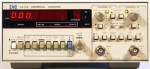
 Once again, knowing no end to repairing things, I saw an HP 5316a come up on eBay for cheap ($20), that I bid on first thing, and ended up winning. Not sure I WANTED to win it, but hey, it’s a repair, I’m cool with doing those. Maybe I’ll be able to resell it, maybe not. *shrug*
3 days later, it showed up on my doorstep via FedEx, and looked to be in good condition, except the missing handle and feet, as described by the seller. Initial power up showed it power up okay, but never register any count. The gate LED would trigger, as would the sensitivity LED, and both could be adjusted. I did get a alternating flashing of the HP-IB LEDs on the front panel though (at this time, I didn’t know what this meant).
After opening the unit, I noticed two empty sockets, one on the HP-IB (GPIB) card, and one on the main board. It appeared they were used for a ribbon cable between the two, but the cable was missing. Also, another power up showed an E2 error (which translates into a failed HP-IB card)… which isn’t surprising given the connection to the HP-IB card was missing. I’m just not sure why it booted okay previous to that.
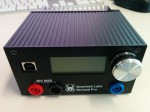 I have wanted a Programmable load for a while, and truly needed one since I purchased an unknown quality HP 6624 for $10 at Goodwill and needed a way to test it before re-selling. I’ve looked at the venerable BK Precision, as well as the “knockoff” (or OEM, depending on who you believe), Maynuo equivalent. But, I just couldn’t swallow the $300+ price tag. I also looked at building one, but it just never made it on my list. But then, Arachnid Labs came to the rescue, and created the Re:Load Pro, a programmable version of his inexpensive Re:Load that offered a simple DC load equivalent to Dave Jones’
  At the request of my wife, I’ve started playing with the idea of writing a “book” for the purpose of educating hobbyist’s and EE’s spouses (or significant other), as well as kids. It’s point is to be very simple, not delve into the math at all (except ohm’s law, of course), and instead just explain basics of what we’re working on, what’s on our bench and parts bins, etc. The hope being that they could read through some basic information, and be able to have a basic concept of what we spend all our time doing, or when we explain a repair, they have some basic knowledge to use for understanding our language.