Everybody Staze...

Nobody leavz...

  • Home
  • About Me
    • LinkedIn
    • Lab
  • Contact
  • Links
  • Reviews
  • Sitemap
  • Weather
You are here: Home / Archives for Racal-Dana 1992

DMMCheck Plus

2015/05/20 By staze

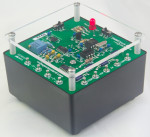
DMMCheck PlusAs some may have realized, I have a decent number ((10, by last count)) of multimeters now but since all of them have been purchased second hand (eBay, or Goodwill), and several of them have been repaired, I had no real solid confidence in any of them as being highly accurate. Though, to be fair, I didn’t have any real reason to doubt them either. I did check in to see what calibration of one of my Keithley 196’s would cost, but the number was much more than I’d want to pay (I believe it was about $450). So, I’ve been eyeing a product called the DMMCheck Plus for a while. It provides a 5V DC and AC, 1mA DC and AC, some precision resistors (100R, 1k, 10k, 100k), and a 100Hz frequency to check your meters against. All of these are calibrated by the guy that makes them with his 8.5digit HP meter, that’s NIST traceable. Meaning I should be able to check against it for how far out of calibration any of my gear is.

I happened to have a PayPal balance, so I purchased my DMMCheck Plus through eBay and since they’re made up in southern Washington, I received it the day after shipped (I think from order to receipt was 3 days). The unit comes with a battery (which is how it’s calibrated), a hand filled in calibration sheet (showing the values for each test), number of burn in hours (mine was burned it for just over a month), and instructions. It’s really quite easy to use, and well worth the money, I think, to at least get a sense of how accurate your meters really are.

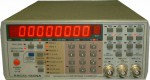
What I didn’t expect was what would be the most “in cal”. My Fluke 8060a that I purchased for about $40, replaced the caps on, and mainly have for nostalgia, was the most calibrated of my handheld meters. My Keithley 199 was the most in calibration of my bench meters. And amazingly (though not surprising given everything else I’ve seen with it), my Racal-Dana 1992 was amazingly accurate. The calibration of the 100Hz source says it should be 100.004608Hz, and my 1992 on a 10s gate showed 100.00463493Hz, or off by only 0.000026Hz ((Accounting for significant digits)). My other meters were all close enough for my work, and certainly not so far out that I’d pay for a calibration. I’ll definitely be double checking with this device now and again. Really makes me wish there was some ability to make a pocketable voltage reference that did 300mV, 3V, 30V, and 300V, as those are the ranges for my Keithley bench meters. But, battery driving for 30V and 300V, and getting a stable reference value might be tough. =(

Really, I’d highly suggest picking up one of these if you actually worry about your calibration for meters, or just have no idea how good or bad they are.

[xrr rating=5/5]
Filed Under: Reviews Tagged With: DMM, DMMCheck Plus, Fluke 189, Fluke 8060a, Fluke 87, Keithley, Racal-Dana 1992

Racal-Dana 1992 Button Repair

2015/01/18 By staze

racal-dana-1992-frequency-counterLike nearly ever other Racal-Dana 199x owner, I have the mushy/lifeless buttons, so this last week (during vacation) I decided to do the replacement work. It involved unsoldering all the stock buttons (34 of them). Thankfully I have a Hakko FR-300 desoldering gun that made very quick work of removing the buttons ((note: you’ll need the N50-06 tip to fit around one of the lugs on the buttons, which for some reason have one small, and one large lug)). Took maybe 5-10 minutes to remove all the original buttons. The replacements I used were Panasonic EVQ-21509K switches. The only issue with these is the hole spacing on the board is not “standard” so you have to work at placement to get them lined up. Some others have purchased 4-contact switches on ebay, and cut two corner legs off, and then installed the switch angled 45°. In hind sight, this may have been easier since I had to tweak things a bit to get all the switches lined up.

The real bear of the install was modifying the key caps to fit the new buttons. The original buttons have a cross top that fits into the buttons, and holds them on via simple friction. The new buttons, however, are standard cylindrical actuators. Modifying them required some side cutters (which anyone in electronics will have), and needle nose pliers to twist out the cut pieces. The worst part is on your fingers, as holding the buttons gets pretty painful over the 34 of them… but after an hour or so of work, I had them all done, and waiting to be glued. Then the realization hit me. Because of the weird leads on the Panasonic switches, they didn’t sit flat against the PCB, so the switch stems weren’t perfectly upright, and therefore the key-caps didn’t sit in the holes right. Damn it.

So, admitting defeat, I ordered some cheap 4 contact switches on ebay (6x6x9mm, same as the Panasonic’s), and removed all the panasonic switches (again, thank god Hakko FR-300). 3 weeks later, the eBay switches arrived, and after removing two corner legs, the new switches sit much better, albeit, diagonally (who cares). The legs did have to be bent a tiny amount, but the biggest issue was really just pressing the button against the PCB while soldering it in place. Total time to install all the new buttons took about an hour. Clearing out the inner part of the button caps took a bit longer, and gluing them in place was a bit of a pain, but wasn’t terrible. And really, having working buttons made all of it well worth while. Good luck!

Filed Under: Electronics Tagged With: eBay, Hakko, Racal-Dana 1992

Recent Repairs/Refurbishes

2014/07/07 By staze

Thought I would throw this into a general email since neither of these require their own write-up.

I recently purchased another Racal-Dana 1992 off eBay as non-working for $60. Having one of these already, I knew not a whole lot could be wrong, and it was most likely the primary oscillator having come loose from the main board (the CPU in the Racal-Dana uses the Counter reference Oscillator for it’s own crystal). Anyway, on receiving it, I saw that indeed, it didn’t work. Opening it up, the oscillator was firmly seated, and I could see the 10Mhz out at the standard output BNC. Looking around the unit, I saw that the IC for the display (in a socket at the back of the display/button board) was unseated slightly. I pushed it back in, and powered up the unit, and it worked! Easiest fix ever. On to eBay it goes!

The second item was a real find. I routinely visit a local computer “thrift” shop for random bits and bobs, and there laying on the bottom of a shelf was an HP 6624a (http://www.home.agilent.com/en/pd-836785-pn-6624A/system-power-supply-40w-4-outputs). Obviously marked HP, so it’s older, but it was only $10! All it had on it was a sticker saying “turned on, display showed information”. Clearly, whomever priced this must have thought it was a UPS, or old Server, or something, because even cheap ones on eBay go for several hundred dollars. Getting the unit home, I powered it up and spot checked the outputs, and they all work great! It’s not the greatest precision power supply I’ve ever seen, but it is 4 sensing outputs, and according to the manual can sink as much current as it generates, so the uses would be pretty high. That said, I don’t need anything this big, nor could I find a place to put it. So, on eBay it goes. I hope to get enough to just buy a Rigol Bench PSU (DP832) that is mV and mA accurate. =)

Update: Sale of the Racal-Dana took 2 days, and was enough to purchase a programmable load (to help test the HP 6624a), and a GPIB to USB adapter (also be good for testing it, as well as normal lab use). So, hooray!

Filed Under: Electronics Tagged With: HP 6624a, Racal-Dana 1992, Rigol DP832

Weather

Categories / Archives

  • Apple
  • Coding
  • Electronics
  • Energy
  • Home Ownership
  • Miscellany
  • Politics
  • Prius
  • Sys Admin
  • Travel
  • Uncategorized
  • Work
  • June 2026
  • April 2026
  • August 2025
  • April 2025
  • January 2024
  • February 2021
  • July 2020
  • January 2020
  • April 2019
  • March 2018
  • February 2018
  • June 2017

Copyright © 2026 · Staze On Genesis Framework · WordPress · Log in