Everybody Staze...

Nobody leavz...

  • Home
  • About Me
    • LinkedIn
    • Lab
  • Contact
  • Links
  • Reviews
  • Sitemap
  • Weather

Fluke 12 repair

2015/06/01 By staze

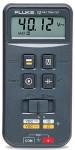
Fluke 12Another meter repair everyone! Anyway, as usual, I purchased a Fluke 12 off eBay listed as the buttons not working, but the meter itself worked as long as you were measuring diodes, or VDC. After a quick search online, this appeared to be due to the elastomeric strip between the buttons PCB and the main PCB being dirty, or failing. I contacted the seller to make sure the case wasn’t broken (as this meter seems to be on Fluke’s “Repair by Replace” list, I didn’t want to fall into that trap again), and after he said it was all intact, I ordered the unit for $30 + $6 shipping.
The meter arrived, and indeed, the buttons didn’t work. Nice “click” when pushing, but no registration. I pulled the screews from the back of the unit, and the main PCB clips into the case in a rather awkward way (really Fluke?). After getting that out, there’s a plastic/metal shield that holds the LCD and button board in place, and a cutout for the two elastomer strips to pass through. I cleaned the main PCB real well hoping that would help, but sadly, it still doesn’t work. I grabbed my meter, and checked the strip it came with, and it registered in 5 mega-ohms. Well, that’s not right. Online I found some references to stealing the elastomer strips out of a Harbor Freight cheapo multimeter. As luck would have it, I had one of those I got for free a while back. Indeed, it has two strips between the board and the screen, and while the height of them is right, the thickness is off (they’re just over 1/2 as thick is the stock strip). So, I cut two to the right length, and measured their resistance: about 5-10 kilo-ohms. Much better. I doubled them up and managed to shove them into the space where the old strip was, and closed the unit up. Once the screws were in (and therefore pressure applied to the strips), it worked! Total repair time, less than 10 minutes. Cost, free!

[Read more…]

Filed Under: Electronics Tagged With: Fluke, Fluke 12, Harbor Freight, Multimeter, repair

The story of the mis-wired XT60 connector and the DJI Phantom

2015/05/28 By staze

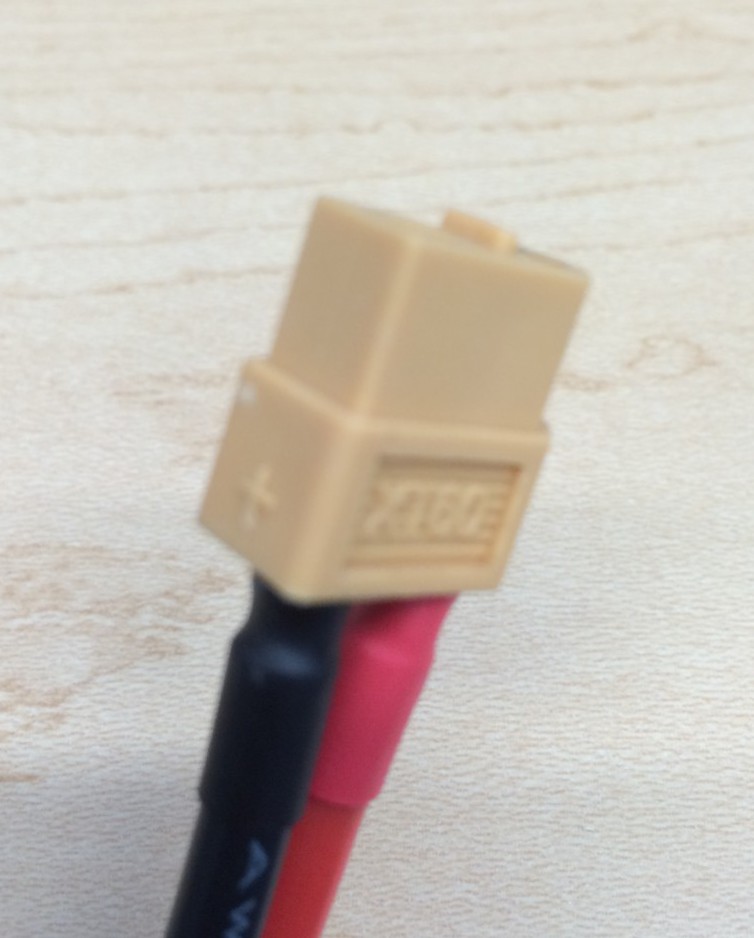
Mis-wired XT60I was recently handed a malfunctioning DJI Phantom Quadcopter that anytime the owner tried to lift off, it would just flip backward and crash. So, I went about recalibrating, and figuring out how to actually fly a Quadcopter. Anyway, I figured it out ((The “front” of the Phantom is determined by which end you point “down” during the compass calibration. According to their rather lackluster drawings, the “front” is the battery door side)). Anyway, I flew the unit around for a bit, then when the battery got low, the unit landed and showed me it’s wonderful flashing red light.

So, I brought it in, and plugged in the dead battery. As “luck” would have it, though, the place the unit was ordered from sent a free extra battery (RC-2220C3S) made by some other company (WATSON). So, I figured I’d try that. I checked the unit with a multimeter based on lead coloring, and saw it was at 11.2V, which is fine. So, I plugged the battery into the Quad, and was immediately greeted with flames, and a huge amount of “blue” smoke. I quickly unplugged the battery to figure out what the heck went wrong. An XT60 connector is polarized, so there’s no way to plug in backward. But, if you’re eagle-eye’d, you’ll notice the picture for this post, and something I didn’t even think about prior to plugging in the battery. The pos/neg (red/black) are wired backward! So basically 11.1V and all but unlimited amps (Lithium Poly battery) went up the ground plane, and anything that didn’t have polarity protection was fried (or at least the first thing to short was fried).

[Read more…]

Filed Under: Electronics Tagged With: DJI, Phantom, RC-2220C3S, Tantalum, Watson, XT60

DMMCheck Plus

2015/05/20 By staze

DMMCheck PlusAs some may have realized, I have a decent number ((10, by last count)) of multimeters now but since all of them have been purchased second hand (eBay, or Goodwill), and several of them have been repaired, I had no real solid confidence in any of them as being highly accurate. Though, to be fair, I didn’t have any real reason to doubt them either. I did check in to see what calibration of one of my Keithley 196’s would cost, but the number was much more than I’d want to pay (I believe it was about $450). So, I’ve been eyeing a product called the DMMCheck Plus for a while. It provides a 5V DC and AC, 1mA DC and AC, some precision resistors (100R, 1k, 10k, 100k), and a 100Hz frequency to check your meters against. All of these are calibrated by the guy that makes them with his 8.5digit HP meter, that’s NIST traceable. Meaning I should be able to check against it for how far out of calibration any of my gear is.

I happened to have a PayPal balance, so I purchased my DMMCheck Plus through eBay and since they’re made up in southern Washington, I received it the day after shipped (I think from order to receipt was 3 days). The unit comes with a battery (which is how it’s calibrated), a hand filled in calibration sheet (showing the values for each test), number of burn in hours (mine was burned it for just over a month), and instructions. It’s really quite easy to use, and well worth the money, I think, to at least get a sense of how accurate your meters really are.

What I didn’t expect was what would be the most “in cal”. My Fluke 8060a that I purchased for about $40, replaced the caps on, and mainly have for nostalgia, was the most calibrated of my handheld meters. My Keithley 199 was the most in calibration of my bench meters. And amazingly (though not surprising given everything else I’ve seen with it), my Racal-Dana 1992 was amazingly accurate. The calibration of the 100Hz source says it should be 100.004608Hz, and my 1992 on a 10s gate showed 100.00463493Hz, or off by only 0.000026Hz ((Accounting for significant digits)). My other meters were all close enough for my work, and certainly not so far out that I’d pay for a calibration. I’ll definitely be double checking with this device now and again. Really makes me wish there was some ability to make a pocketable voltage reference that did 300mV, 3V, 30V, and 300V, as those are the ranges for my Keithley bench meters. But, battery driving for 30V and 300V, and getting a stable reference value might be tough. =(

Really, I’d highly suggest picking up one of these if you actually worry about your calibration for meters, or just have no idea how good or bad they are.

[xrr rating=5/5]

Filed Under: Reviews Tagged With: DMM, DMMCheck Plus, Fluke 189, Fluke 8060a, Fluke 87, Keithley, Racal-Dana 1992

« Previous Page
Next Page »

Weather

Categories / Archives

  • Apple
  • Coding
  • Electronics
  • Energy
  • Home Ownership
  • Miscellany
  • Politics
  • Prius
  • Sys Admin
  • Travel
  • Uncategorized
  • Work
  • April 2026
  • August 2025
  • April 2025
  • January 2024
  • February 2021
  • July 2020
  • January 2020
  • April 2019
  • March 2018
  • February 2018
  • June 2017
  • February 2017

Copyright © 2026 · Staze On Genesis Framework · WordPress · Log in