 Yesterday I saw the new X-Men movie, and I must say off the top, that it may be my favorite X-Men movie to date, and certainly rates as one of the best Marvel movies. Anyway, to the review. And yeah, they’ll be some spoilers). Click the “more” to see the rest.
Genie Garage Door remote upgrade
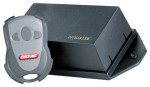 Just a short post: When we bought our house, it came with a 1992 or so, vintage Genie Garage Door opener that used the old dip switch style remote code. I recently found a GIRUD-1T conversion kit at the local Goodwill for $5, and figured I’d convert it, but in the process you want to remove the old controller, or at least clip the antenna.
When I opened the unit, I saw the remote board was only held in by one screw, and had a simple 3 wire header wire hooked to it (more on this in in a moment). Upon opening up the “box” that the GIRUD came in, I noticed the board was the same size, but had screw terminals on it… but it also had the PCB holes for a header. Genie are pragmatic! The conversion kit was literally just the exact same controller that they’d put in an opener, in an enclosure! I took both units, removed the screw terminals from the new on, and move the header over. The only caveat is that the 3 pin connector will go on upside down from the previous board (ground toward the top, vs ground toward the bottom).
After that, it was just screw the new board in, and hook it up. Worked great (new board actually has a relay that audibly clicks when it gets a good remote signal). If curious, the GIRUD board is packaged with a 24VAC adapter that is for power. But, if you look at the board, they’ve just implemented a half-wave rectifier (capacitor and diode) to give DC to the board. Giving it 24VDC is no problem, then.
Of interest to those that are curious, the pin header has a Vcc (Purple), GND (Green), and Trip (Black) connections. When the remote control receiver gets a good signal, and wants to open the door, it grounds the Trip wire, which then tells the controller to open the door. Otherwise, that pin just floats.
Pretty simple project, and avoids the extra wiring and ugly box on the ceiling. Now, I think I’m going to see if I can create some type of code scanner with the old remote and receiver to see JUST how insecure those old openers are. =)
2nd Fluke 87 True RMS Multimeter Repair
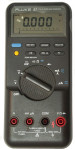 Just posting a quite note that I recently purchased another Fluke 87 from eBay, this time at a more rational price of $75, with a fading display. With the wonderful help of Mr. Modemhead’s detailed explanation, I was able to get the screen back to factory quality, and the unit looks brand new!
Also cleaned up the yellow rubber boot with another page he published here. Meter looks brand new, took me maybe 25 minutes to do the screen repair. I’m pretty darn happy. I now have a Fluke 8060a, 87, and 189… I’m not sure they’re all considered the same family, but that’s how I’m going to look at it. =)