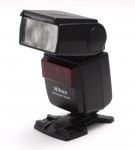
 While loading the car for a shoot several weekends ago, I proceeded to drop my Nikon SB-600 from about 2 feet high onto the tile of my mudroom. I thought “crap, hope that survived”, and finished packing. I set up at the shoot, and my wife (who’s the actual photographer) started shooting, but complained the flash wasn’t working. Looking at it, the screen was misbehaving, it would flash inconsistently, and then after trying to power cycle it, it wouldn’t come back on. Uh oh. Shaking the flash, I heard rattling. Crap.
While the shoot was going on, I started looking online, and as it turns out, this is extremely common. It appears that the battery compartment rests on top of a large SMD inductor, that when the unit is dropped, with batteries installed, the impact crushes that inductor, which usually takes out the diode above it. See the ifixit article. Anyway, after the shoot (one flash down) a got the unit apart, and found that indeed, those two components were damaged. Also, while sifting through the rubble of the crushed inductor core, I found a 3 pin SOT-23 device. After looking, it came from the ZD301 spot. A zener diode. Huh. It’s marked 431, but it doesn’t appear to be a TI LM431. Some searching got me to a Russian site that indicated the unit was an RD43B-M, or a 43V zener! Apparently it’s some protection for signals coming in from the hot shoe (I think). No idea why it’s 43 volts, but…
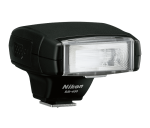 I recently found, and purchased, a broken Nikon SB-400 Speedlight off eBay for $35. Knowing I’d been looking for one for years, I figured worst case the tube was bad, and I’d be able to replace that for less than $15. The seller was great to work with, and got the unit shipped out immediately. The unit arrived, and I had a small hope it just worked, since the seller indicated they didn’t have a camera to actually test it with (and interestingly, the SB-400 has no “test” button (you can’t press the ready light and get it to fire like pretty much every other camera flash that has ever existed)). But, sadly, it didn’t work. Okay then, time to take her apart (WARNING: Camera flashes contain a high voltage (and relatively high capacity) capacitor. In most cases, these can hurt you. It SOME cases, they could probably kill you. If you don’t know how to properly discharge these capacitors, DO NOT attempt flash repairs yourself!).