Everybody Staze...

Nobody leavz...

  • Home
  • About Me
    • LinkedIn
    • Lab
  • Contact
  • Links
  • Reviews
  • Sitemap
  • Weather
You are here: Home / Archives for Reviews

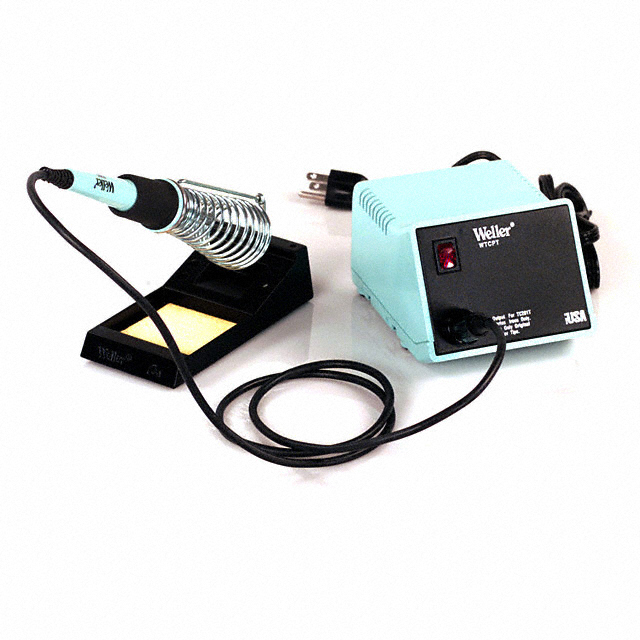
Weller WTCPT Soldering Iron

2012/10/05 By staze

Back in January of 2006, my wife (then fiance) bought me a REAL soldering iron, after I’d been using the generic crap you see from Radio Shack for $20 (plugs directly in the wall, no temp control, measured in watts, etc). At that time, I was doing some soldering at work with a fairly decent, ancient, HAKKO 936. A great iron, but uses an analog dial to set temperature. Since everything I solder is done at about 700F, it seems a bit silly for the temp to be adjustable up to 900F.

So, after some research, I came across the Weller WTCPT. It got great reviews, and it basically lived at a constant temp (more on this later). A quick trip to a local, now defunct, electronics retailer showed they had it for $124, which was a great price. A few weeks later my wife bought it for me as a gift. And since that time, 6+ years ago, I have NEVER had a problem with it, and I just recently taught her how to solder with it.

So, what makes it so reliable? The temp control. Many nicer soldering irons, including the Hakko FX-888 we just bought at work, have a temperature control dial which you set to the temp you want to solder at. This is handy it some situations, but most of the time, it’s not needed. Most soldering I ever do is at 700F, so I don’t need to worry about the dial. The WTCPT is designed with this in mind. Basically, the tip controls the temperature. You buy a tip rated at either 600F, 700F, or 800F. On the end of that tip is a ferromagnetic end, which at any temp below it’s rating (let’s say 700F), is magnetic. When it gets to 700F, it ceases to be magnetic ((This is called the Curie Temperature)). See where I’m going? The electrode in the soldering iron handle is a magnet, and heats the tip up to it’s temp, at which point the tip is no longer magnetic, so the electrode disconnects (via spring). Once the temp drops back down below that temp, it is magnetic again, electrode reconnects, and heats it back up. So you hear the iron click every 10 seconds or so briefly once it’s up to temp. The awesome thing is it’s extremely accurate, and never needs adjusting. Obviously the downside is, adjusting the temp of the iron requires letting it cool down between changing tips. But again, I rarely use anything but 700F, so I don’t care.

Because of all this, as well, there’s VERY little to break down, and the tips, since they’re designed for a specific temp, are quite inexpensive (about $5-7 each).

It’s a soldering iron, so I can’t go on a whole lot about it, but it is by far the easiest, and most reliable one I’ve ever used. I’m sure better ones exist, but for the price point, and for what it does, I’m not sure it could be ANY better. There are reviews out there of people that have had theirs for 30 years, with no problems. Can’t go wrong with that. Highly recommended. Pick one up on Amazon (least expensive), Digi-Key, or Mouser.

[xrr rating=5/5]
Filed Under: Reviews Tagged With: Soldering Iron, Weller, WTCPT

Hazard 4 Kato Mini-Messenger Bag Experience

2012/09/10 By staze

I have had my Kato Mini-Messenger Bag now for over a month, and I think I can now write a review on how I actually like the bag.
The short version is, I love it. It’s a great bag. Well made (save one sloppy stitch that I already fixed), comfortable, and it holds a ton. And that, really, is the only problem. I’ll explain.

The bag has two main pockets on the outside surface. The front pocket on the flap, and a back padded pocket for an iPad-sized tablet. I store my Nook in the front pocket, and nothing in the back. Open the flap, and you have a pocket on the back of the flap (closed by a small velcro patch), then you have some MOLLE loops, and the map pocket area. In there, there’s pocket for a map, then some small pen-sized pockets, and another area closed by velcro that’s about the same size as the front pocket. Then the main area for CCW, or a Macbook Air, etc. I don’t currently use that space either. But that’s the thing, I don’t NEED to, yet. The bag has SO much storage and SO many pockets, I keep adding things, and forgetting they’re in there until I realize the bag has gotten overly heavy, and remove them to save weight. Is this a problem? No… most people (myself included), want storage space. It’s just a bit weird to have so many pockets that you forget what you’ve put in them.

So right now, I’ve got a Nook, Prius Fob, Leatherman XTi, CRKT Eat’n Tool, CRKT Van-hoy On Fire, 25′ of Paracord, 100′ of 25lb Mono-filament, Fenix RD20, Maglite XL200, Couple Pens, Lockpick set, 5×7″ Grit-it with an iPhone sync cable, MicroUSB cable, iPhone Charger, Nintendo DSlite USB charge cable, and two small bottles of Excedrin and Naproxen Sodium. The whole bag probably weighs about 7lbs. It’s not very heavy at all. At some point I’ll get a Macbook Air and add that to the bag, which will obviously add a couple pounds, but still a VERY good EDC bag.

The other minor annoyance is the use of Velcro/Hook-and-loop for closure. I hate the stuff. Noisy, wears out, etc. So, I took a couple pieces of hook field I had, and covered the loop side. So, they don’t “close”, but to me, that’s fine.

All and all, very happy. And extremely pleased with the service provided by the supplier Tactical Distributors. If you’re looking for a good EDC bag, and like the vertical style bags rather than a more traditional messenger style, I’d highly recommend it. Heck, judging by their designs, anything from Hazard4/Civilian Labs look great!

[xrr rating=4.75/5]

Filed Under: Reviews Tagged With: EDC, Hazard 4, Kato Mini-Messenger, Tactical Distributors

Tokina 100mm f/2.8 AT-X PRO 1:1 Macro

2012/08/13 By staze

My wife is a photographer. She’s been doing product photography for a local jewelry shop for a couple years now, and in the last year has gotten into “normal” photography as well. She’s attempting to start a business doing it, so to help with that, we purchased the Tokina 100mm f/2.8 Macro lens (Nikon Mount) for her to do product photography outside work, as well as a pretty good portrait lens (though admittedly, with a DX (APS-C) camera, it becomes 150mm and you have to stand pretty far from the person being photographed.

We purchased the lens from the local Shutterbug (an Oregon based, often found in the mall, camera shop). They price matched to B&H, Adorama, and Amazon (though they initially tried to add in the price of next day shipping). We did this largely because they were able to order the lens, and were willing to let us play with it before purchase. Buying online doesn’t have this advantage. It took almost exactly the quoted 3 weeks to arrive, but it did make it in time for a planned trip to Portland (which ironically has a camera store that stocks this lens (Pro Photo Supply).

Initial impression is quite good. The lens feels quite solid, has the classic Tokina AF/MF switch (pull the focus ring toward the camera for MF, push away to AF), which I find very intuitive and useful. While the lens does extend with focusing, it’s not obnoxious. With the hood on, however, the lens does become pretty darn long at full extension. One of the biggest advantages to the lens is the price. At $489, it’s a bit over half the cost of the Nikon 105mm Macro/Micro Lens. And while, yes, the Nikon focuses completely internally and has VR, as well a focus motor, none of these things really make it worth the price difference. Especially given macro photography rarely uses auto focus, and since it’s generally on a tripod, VR is nearly worthless. Oh, and weight. The Tokina weighs in at 19 oz, while the Nikon is over a half pound more at nearly 28 oz (27.9 oz). Focusing is pretty darn fast, and pretty quiet. Not sure what some others online have complained about.

There are more extensive reviews here, here, and here.

All and all, I’d highly recommend. While I can’t speak for whether a filter should be used or not (using a relatively inexpensive one currently, will probably switch to a 55mm Hoya HD in the coming months), I still prefer to use them since filters are “cheap” relative to replacing a lens.

[xrr rating=5/5]

Filed Under: Reviews

« Previous Page
Next Page »

Weather

Categories / Archives

  • Apple
  • Coding
  • Electronics
  • Energy
  • Home Ownership
  • Miscellany
  • Politics
  • Prius
  • Sys Admin
  • Travel
  • Uncategorized
  • Work
  • April 2026
  • August 2025
  • April 2025
  • January 2024
  • February 2021
  • July 2020
  • January 2020
  • April 2019
  • March 2018
  • February 2018
  • June 2017
  • February 2017

Copyright © 2026 · Staze On Genesis Framework · WordPress · Log in