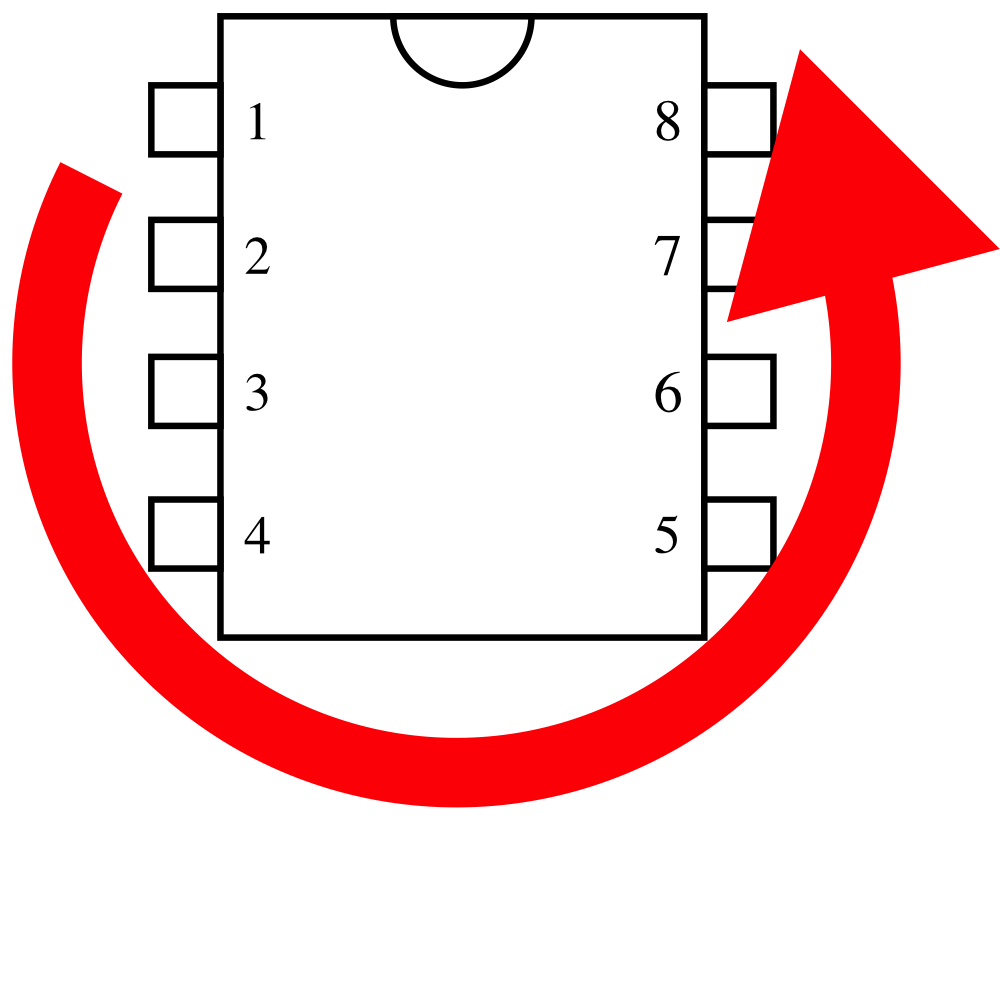
So, see the picture? Got it? I’m such a dumbass sometimes.
Image Courtesy of Wikipedia article on DIP. Bonus to anyone that can tell me who thought of, and why, the pins are counter-clockwise vs clockwise.
Nobody leavz...
By staze
So, see the picture? Got it? I’m such a dumbass sometimes.
Image Courtesy of Wikipedia article on DIP. Bonus to anyone that can tell me who thought of, and why, the pins are counter-clockwise vs clockwise.
By staze
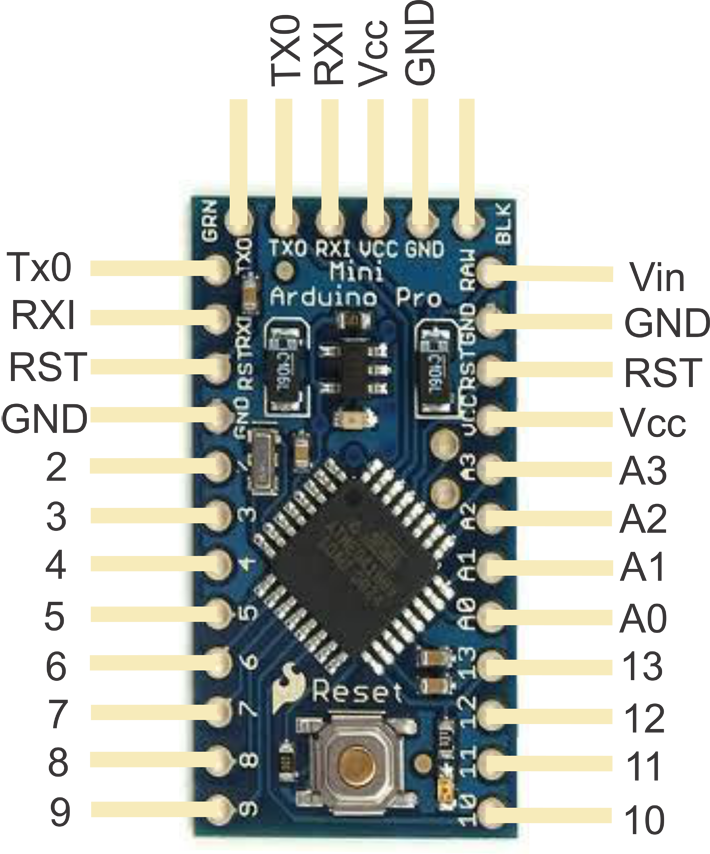
For a few years now, I’ve really wanted to monitor my water usage at the house, and like most American homes (or at least, every one I’ve seen), my analog water meter sits in the ground out by the street, making measurement a bit difficult. But, what little information is out there indicates that it should be doable with a Hall Effect Sensor (something that can “see” the spinning magnet within the meter, and output pulses). Then it’s just a matter of recording those pulses, and sending them back to my computer… enter the wild world of Arduino programming, and the wonder that is eBay and the inexpensive Chinese Arduino clones. But truthfully, what pushed me over to the idea of doing some Arduino projects (other than the really inexpensive Chinese options), was building a simple LED cube to stick in my office at work. 100x LED’s are only $4.75 or so from China, an Arduino Pro Mini knockoff is less than $3 (or just an DIP ATMega328p is about the same)… really just depends on how you want to set it all up. Anyway, I’ll try to have a new post about that a bit later. As well as one on how my water meter project is coming… the biggest issue with that is power. I either have to run some cat5 out to the meter to provide power, and return signal (I guess phone wire would work as well), or I need to have the unit run off batteries, and send the data back wirelessly (Xbee?). And obviously, if battery powered, I’m not going to want to go out and replace the batteries every week, so ideally 6months+ of runtime would be ideal… which may not be possible since the Hall Effect Sensor indicates it wants to draw about 4mA. =/
Anyway, these are the things I’m trying to work on in my “free time” (see previous posts about small child in the house). So yes, I’m showing up to this party a bit late, but maybe I had to do some analog work before I “graduated” to digital. I just wish I had learned C at some point in my learning programming before now.
But, a few things I’m working on project wise are:
So, all of that should keep me busy for a while… =)
By staze
I have been looking for an easy way to monitor USB voltage and power used by devices, and while there are numerous cheap usb inline adapters to do this, and a few people that just show how to cut a USB cable so you can probe the lines, I thought both of these seemed a bit weak. Then, looking around Tindie.com one day, I found the USB Tester 2.0. It’s a very simple PCB, and some pin headers. The advantage is it provides easy voltage/current monitoring, but also provides an easy way to probe the data lines with a scope. Plus, it isn’t ugly (like a hacked USB cable would be).
I ordered the “kit” on a Friday (along with the Plexiglass base), and it was shipped from California the same day. Somehow USPS opened a wormhole, and I got the kit the next day (Saturday). Assembly was extremely straight forward via the instructions here. Took maybe 5 minutes, at most (including time for the soldering iron to warm up). Initially, I was a bit confused by the pin header holes being a bit offset from each other, but it seems to was done on purpose to hold the pin header in place for soldering, which is awesome.
Anyway, once assembled, the units work as expected. The only problem I’ve seen is that the 4mm “jacks” are a little smaller than 4mm, it seems. My dual banana plugs don’t quite fit fully. I’m actually thinking of installing some real jacks on the unit, so things will fit, but I am not sure they’ll fit very well, or not block the rest of the unit. =/ Hopefully I’ll figure something out, as I’d like to be able to use banana plugs without worrying about ruining the PCB holes.
All and all, very happy with the unit. It does what I wanted it to do, and maybe in the future I’ll buy the OLED “pack” that basically makes the unit self-contained and won’t require a meter.
[xrr rating=4.75/5]