Everybody Staze...

Nobody leavz...

  • Home
  • About Me
    • LinkedIn
    • Lab
  • Contact
  • Links
  • Reviews
  • Sitemap
  • Weather
You are here: Home / Archives for TED

TED 5000-G Try Two

2014/02/05 By staze

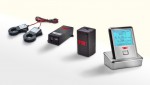
TED 5000-CAlthough I had very little positive to say about the TED 5000 with my last review, after looking at the alternatives, I couldn’t really find anything that matched it’s capability without being the eMonitor (which costs at least 5x as much, and has a subscription fee!). While there are some competitors (one clamps to your meter outside, and a couple use current clamps), none of those also wire into your electrical system to provide actual voltage readings (and therefore power factor). I did get one company to offer a review unit (which I could return if I didn’t like it, or buy for a discount if I did), but it too didn’t provide voltage information, but it also didn’t use Power Line Communication (PLC), so it avoided those issue).

So, knowing that TED (the company) wasn’t going to provide me with a review unit I swallowed my pride, and mailed off a check for the refurbished unit they had offered before.
[Read more…]

Filed Under: Energy Tagged With: Bidgley, Energy, Google PowerMeter, plotwatt, TED

TED 5000-C

2013/12/17 By staze

TED 5000-CSince I first bought my TED 1001 I have wanted a TED 5000. Even back then, there was talk about the forthcoming TED 5000, and at the time, I would email TED support, and they would comment it was in the works. Six months would go by, email again, and same thing. I believe in the end, the product was delayed about a year or more (at least, from the time they were saying 6 months, and the time it actually came out).

Anyway, it came out, and consisted of 2 main parts, and 1 optional one. The MTU (the part that actually measures the electrical usage from the current transformers and then sends that info over power line transmission), the Gateway (which takes that info in, and either uploads to a power monitoring website, or presents it from its webpage), and the optional display unit. The Gateway and the Display talk over XBee. In theory, the MTU and Gateway bit are basically the same as the MTU and station piece of the TED 1001 with the addition of an ethernet port, and internal web server. This provided a relatively platform agnostic approach to the TED, which previously only had a Windows based “client” for the TED 1001, which was only usable if you purchased the unlock code for the USB port on the TED 1001.

Anyway, all of this was good, on paper. As we’ll see, this didn’t all quite play out as one would hope ((an interesting tidbit is that I had asked repeatedly over the years for a review unit, and only recently was replied to, and told they stopped offering them in 2009, which we’ll come back to)).

So, I recently won a TED 5000-C (includes the display, vs. the TED 5000-G which does not) on eBay for about half the cost of a new unit. After some shipping time, the unit arrived, and as it turned out, the Gateway dated back to the original production run of 500 (signified by the serial number of the Gateway starting with 20). After that initial 500, they made some hardware changes to the Gateway, and then incremented the serial number to ≥21. From my understanding, the upgrade was mainly adding more RAM, but there could be more (they haven’t been forthcoming). I’m uncertain if the display and MTU date from a similar time period (it appeared the set I got had been a bit of a mishmash from a couple different sources).

So, first thing, I was a bit disappointed that the gateway was old. I had read that the latest firmware didn’t run well, or at all, on those original gateways. Now, I was able to get the latest firmware(s) onto the gateway, but it was a bit sluggish, and I honestly can’t say I know how well it really worked because of the next section…

The display. The display was… terrible. I actually can’t believe they shipped a product that was so bad. So, the display box consists of a wall wart (fine), a dock, and the display that is quite light, and feels pretty cheap. There’s a large screen on it, a single button (that only changes the info being displayed), and on the bottom, a DC power jack. This “docks” to the charging base that simply has a long DC power plug sticking out of it, which is simply an extension of the jack on the back which you plug the wall wart into. So really, the “dock” is just a plastic box, with a right angle DC jack in it… So first off, docking the display requires way too much force. Because it requires so much force, the dock moves around while plugging and unplugging. You actually have to hold the dock to “dock” the handset. Worse, with the unit I had, if you moved the dock at all while the display was docked, the display would “reset” and register as plugged in, rinse and repeat. I’m guessing the jack on the display had a cold solder joint, but I’m not going to bother checking, it’s just a sign of shoddy construction. Then all that out of the way, there’s the actual LCD. The backlight was quite bright (fine), but I can only describe it as low resolution… maybe it was the font choice, but the readout was extremely blocky. Further, pressing the button required a good second or more to switch between information being displayed, which is completely worthless. Maybe this is because the display isn’t actually receiving information unless it asks for that specific info over XBee, and it takes that long to get the info back from the Gateway, but it seems very user unfriendly.

All of this combined, I didn’t actually bother to install the unit fully. It really started to make me understand why Energy Circle stopped carrying them ((I believe a bigger reason was issues with Power Line Communication, but I’m sure build quality didn’t help)). Contacting TED about the Gateway resulted in them A. saying they didn’t support purchases from non-authorized resellers (understandable), and B. Updating the Gateway would be $75 + $10 shipping. Huh.

What is most ironic about all of this is all of these items probably date back to 2009, when The Energy Detective stopped sending out review units. So the last review units provided to people were before they have, in theory, fixed these issues… but no reviewers would know! In some fairness, they did offer to sell me a refurbished TED 5000 unit for a discount (about 25% off), but not enough of a discount to discourage those interested from buying through eBay, or to encourage reviewers of new hardware. Worse still, their Press department doesn’t respond to email at all, nor does their Support much of the time. Sad, from a really pioneering company. I truly hope they reach out and try to help address my concerns.

After all of this, I’m going to be looking at other products before I consider coming back around to the TED. On paper, and in literature, the TED 5000 looks like an awesome product, at a great price point. In reality, at least the unit I got, was extremely disappointing. I am actually returning it to the eBay seller thanks to his understanding of my frustrations. And unless TED (the company) want to change some minds about this, this review is really going to stand at the rating I give now. This is really sad, actually, because by and large, I like my TED 1001 a lot. It does what it does very well, and reliably.

[xrr rating=1/5]

Filed Under: Energy, Reviews Tagged With: Review, Support, TED, TED 1001, TED 5000-C, The Energy Detective

Filtering X10 and TED signals

2011/11/28 By staze

I’ve talked a bit about this subject before, but with a new experience under the belt, I thought I might add to the collective knowledge out there.

I recently (week or two ago) installed a 12V track light system that obviously uses a transformer (in this case, electric) to step down the standard 110V household current to 12V. It’s not on the same circuit as my TED, or even the same phase, but immediately when turning on the lights, my TED signal drops to 0. It must be that this transformer is putting out so much noise on the system, that it’s going all the way to the transformer at the street, and then back along the second phase. Really, no idea.

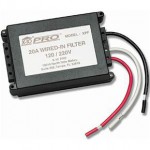
Anyway, after discovering I couldn’t move it to a different phase, I started looking at filtering options to remove all the noise it was causing on my power system. At first I thought I would just filter the offending light, and looked at X10 XPNR‘s which seem like they’re added to the offending device, and remove the noise. But THEN, I stumbled upon this! Holy cow, an actual “official” solution. And while they have them for less than $10, shipping was almost as much as the product itself. So, I went back to my trusty supplier, and got one here, for a total of $16 with shipping. When it arrived late last week, I was a bit surprised by it’s size. Yes, it says how big it is, but you don’t quite get that until you have it. It’s pretty darn big. But, using the directions posted on the TED site, I was able to wire it in (using pigtails for the red and white wires, since all three wires were far too short), and fit it in my breaker box. And afterward? TED works like a charm. I’d imagine my actual signal reliability will be higher with the filter since everything else in the house is no longer causing dropouts. The only other thing I could do would be to create a REALLY dedicated circuit for the whole TED, but that just seems excessive. Maybe if I upgrade to a 5000 I can put it all on it’s own circuit.

I’m approaching another year with the TED, so I’ll be posting back for the new year with new numbers comparing to last year, analyzing this year, etc. Stay tuned!

Filed Under: Energy Tagged With: Filter, TED, X10

Next Page »

Weather

Categories / Archives

  • Apple
  • Coding
  • Electronics
  • Energy
  • Home Ownership
  • Miscellany
  • Politics
  • Prius
  • Sys Admin
  • Travel
  • Uncategorized
  • Work
  • June 2026
  • April 2026
  • August 2025
  • April 2025
  • January 2024
  • February 2021
  • July 2020
  • January 2020
  • April 2019
  • March 2018
  • February 2018
  • June 2017

Copyright © 2026 · Staze On Genesis Framework · WordPress · Log in